At the Speed of the Earth

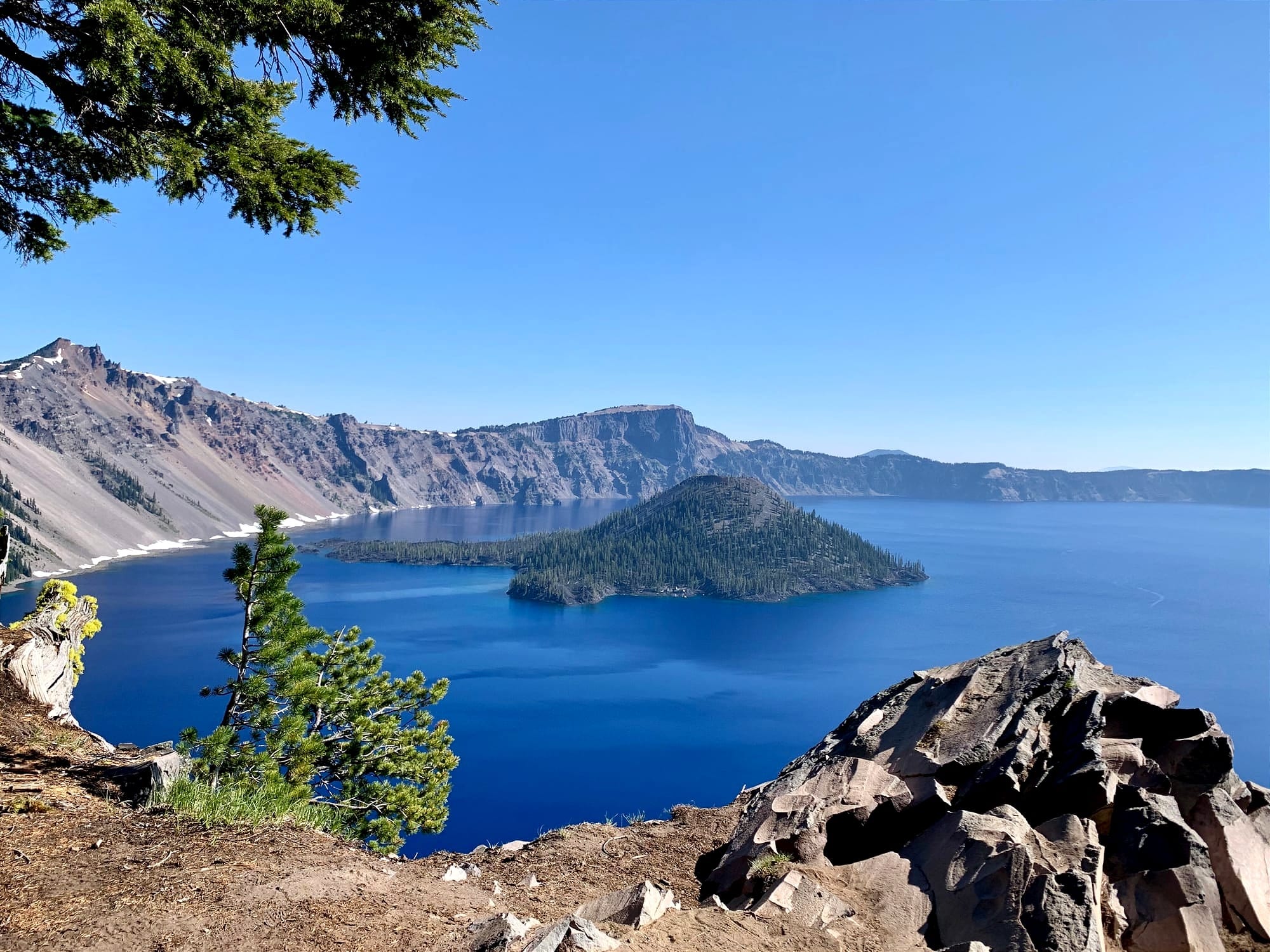
Our topic this fortnight in the Climate change and environmental hazards module has been vulnerability, resilience, and adaptation in relation to climate change.
(And yes, I’ve just begun hearing the word fortnight all the time, one of those charming reminders that I’m back in the world of British English. How lovely 🙂)
At first, these words sound like policy language, but they describe something deeply human: how people and places meet uncertainty with awareness instead of control. They're also interlinked: vulnerability reveals what's at risk, adaptation is the process of response, and resilience is the capacity to live meaningfully through change.
Slow Earth, fast humans
Climate change reveals a tension between slow and fast systems. As the IPCC (2018) reminds us, oceans and ice sheets respond over centuries; their inertia means the sea will keep rising well beyond 2100 even if emissions fall. Also, even if emissions stopped today, the climate would continue to change as Earth’s systems respond to past warming.
Human systems, on the contrary, could change quickly through knowledge, policy, or technology. However, behavioral inertia often keeps societies on old paths. Habits, subsidies, and identities persist even when their purpose has vanished. Inertia is both a physical law and a mirror. In physics, it describes the resistance of matter to change its motion or rest, and in life it shows how systems and people keep their momentum or their stillness even when the world around them has already changed.
There is another kind of slowness too, the kind that hides transformation. It’s a bit like watching the seasons turn. One day in late summer, we notice the first yellow leaves and expect some sort of ripple effect, like the change will be slow. But then almost overnight, the forest shifts and everything looks different. Systems in nature, like society, often behave that way: changes are invisible at first, then suddenly visible everywhere and all at once. The same dynamic unfolds in culture, politics, and climate too.
Bridging this difference in speed is essential, because the planet’s slow feedbacks, once set in motion, will not pause for our hesitation nor wait for us to agree. Some feedbacks unfold on their own timelines. Adaptation means learning to move in a rhythm that is fast enough to reduce harm, but still respectful of Earth’s longer memory. It also means adapting locally while thinking at scale, responding to what each region needs while understanding that all these changes are connected.
This balance is difficult to attain, and that mismatch between scales, human and planetary, is what keeps systems locked. Simply put, we move too fast in the wrong ways, and too slow in the right ones. Listening, truly listening, puts us in a position to notice vulnerability even when it isn’t obvious, to respond before collapse rather than after it. In that pause between reaction and awareness lies the possibility of resilience: using what already exists, re-arranging the pieces, and letting go of what no longer serves. The Earth is a closed system. The materials, energy, and wisdom are already here. The challenge is to open the right pathways again.
Learning from listening
– The Netherlands: learning to work with water, not against it → proactive adaptation.
– Kiribati: reframing displacement as dignified migration → agency and foresight.
– The Bergisches Land region in Germany: small, local acts of rebalancing and remembering → humility and continuity.
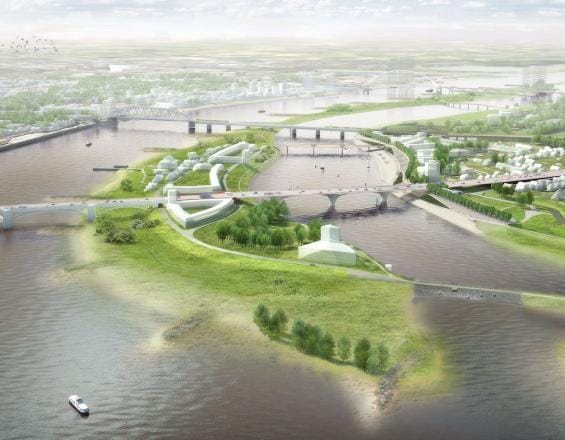
In the Netherlands, a national program called Room for the River invites rivers to overflow safely.
Instead of only building higher dikes, planners give rivers more space by means of restoring floodplains, setting dikes back, and raising homes. Flood protection and ecological renewal are treated as one.
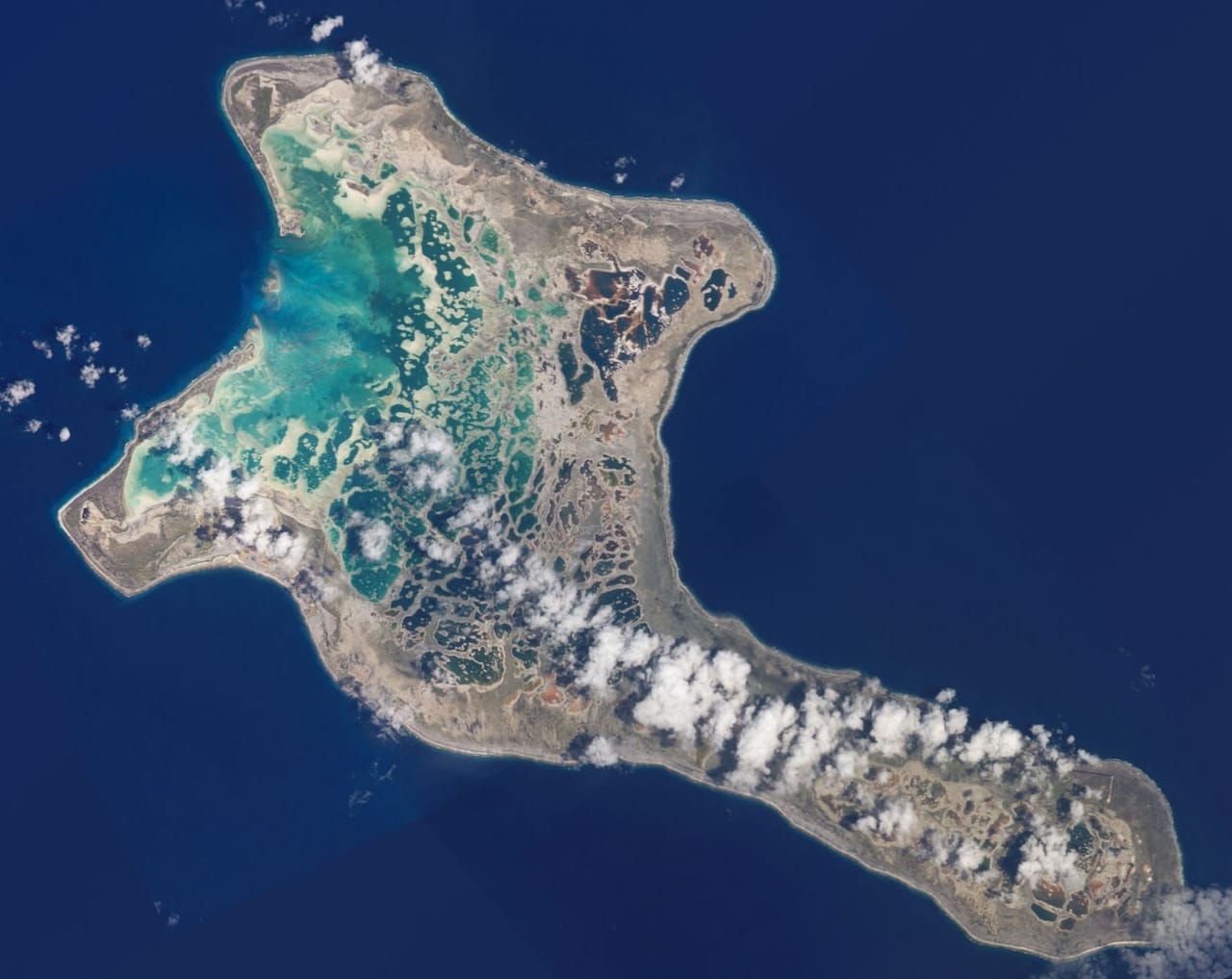
On the Pacific atolls of Kiribati, the idea of migration with dignity has become part of national adaptation planning. The government’s National Labour Migration Policy (2015) envisions “providing I-Kiribati with increased opportunities to migrate with dignity by accessing decent work abroad,” linking labor mobility with climate resilience. The aim is not only to enable movement if it becomes necessary, but to do so with agency, preparation, and skills that create choice rather than displacement. At the same time, local food, water, and governance systems are being strengthened to sustain life in place. Scholars note that implementation remains challenging, as global labor access and domestic priorities continue to shift, yet the idea itself reflects a profound form of adaptation, one that connects resilience with dignity (Government of Kiribati, 2015; McNamara, 2015; DevPolicy, 2016).
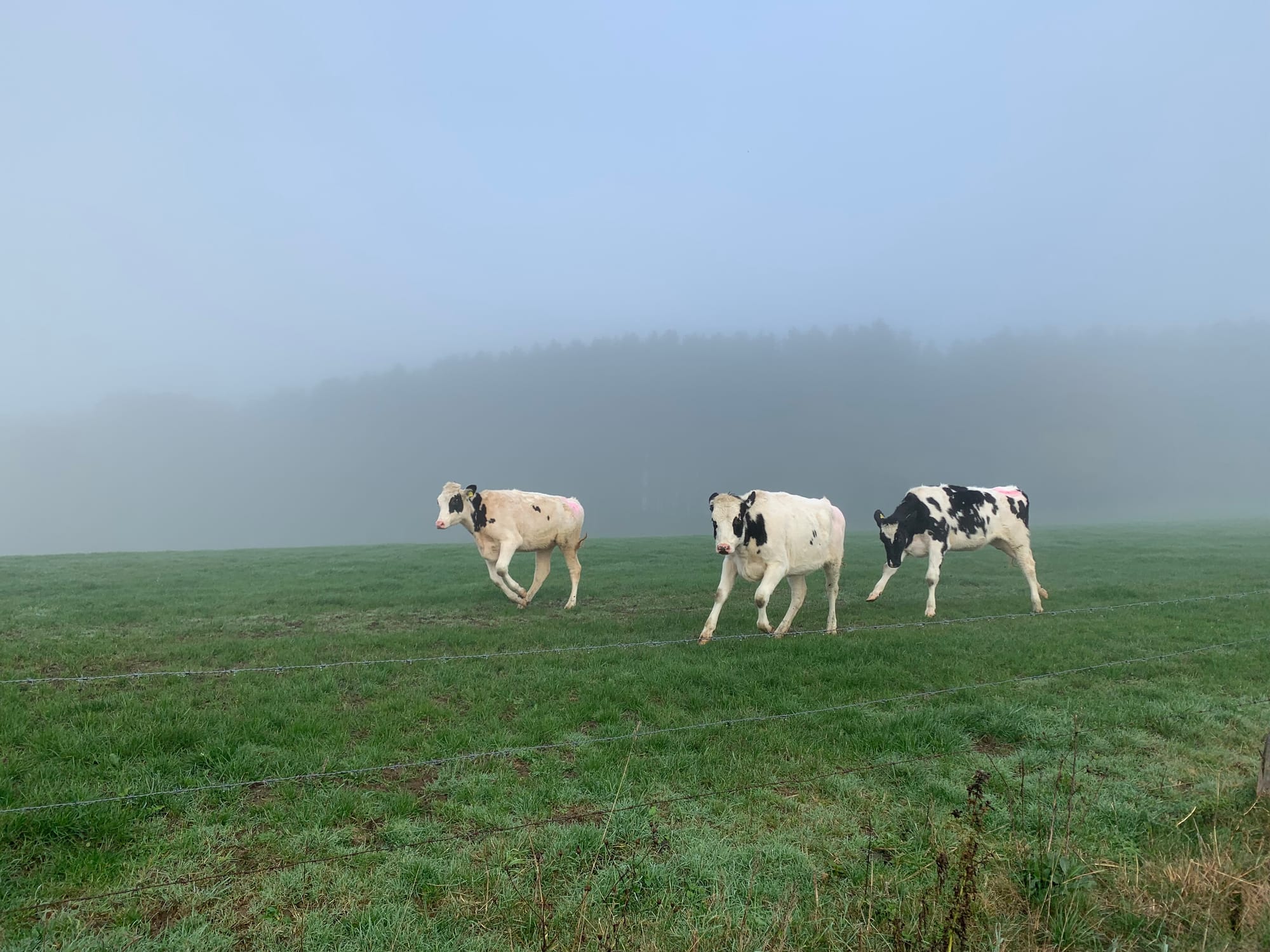
Here in the Bergisches Land hill country of western Germany, the change feels quieter but no less real. The soils are wet, stony, and acidic, as they have always been. The climate is mild, and the weather increasingly unpredictable. These conditions have long favored grassland, livestock, and forestry over large-scale crop farming. Dairy and beef operations dominate, alongside small mixed farms and woodlands that have supported rural life for centuries.
Agriculture and habit have compacted the ground and closed its natural cycles. Reservoirs that once ensured a steady water supply now face stress from lower inflows, managed outflows, and rising evaporation. Yet small cooperatives and pilot initiatives are beginning to look for different ways forward: restoring hedgerows, integrating silvopasture, and experimenting with orchard belts that echo the traditional Streuobstwiesen. These living mosaics rebuild the soil, hold water, and bring biodiversity back while keeping the landscape productive.
In this region, resilience may not mean radical transformation but careful rebalancing. It's about memory; remembering what a landscape is already "good at" and working with that instead of against it.
In systems theory, this is called reducing inertia: the social, ecological, and institutional momentum that keeps us repeating what no longer serves us. But in everyday life, it simply means noticing when we’ve stopped listening. And, in this case, thriving can also mean enough.
From vulnerability to agency
Maybe resilience begins the moment we start listening and when we recognize inertia in nature and in ourselves.
They build trust between citizens, farmers, scientists, and local leaders.
They care for ecosystems as partners, not resources.
And they make choices that fit the character of place.
Adaptation is not defeat, but conscious design, a way of living that accepts movement as part of life. To survive and even thrive in a warming world, we can learn to read the landscape like a language and align our livelihoods with the land’s pace.
While listening, we can expect surprise, strengthen cooperation, notice what endures, love what is still alive enough to change, and act while there is still time for Earth’s big systems — the soils that hold carbon, the forests that buffer climate, and the oceans that regulate heat — to respond and adapt.
It's a paradox of time: even though these processes are slow, we must act faster to keep up. Earth’s systems move in millennia, and we move in fortnights. Our task is to learn how those rhythms can meet, fast enough to protect what we love, slow enough to remember what matters — one fortnight at a time.
References and further reading
Government of Kiribati (2015) National Labour Migration Policy 2015–2020. Tarawa: Ministry of Labour and Human Resource Development.
McNamara, K. (2015) Crossing Hot Borders: Climate Change, Migration and the Human Dimension. Environment and Planning C: Government and Policy, 33(6), 1076–1093.
Rijkswaterstaat (2021) Room for the River Programme. Government of the Netherlands.
IPCC (2018) Global Warming of 1.5°C: Summary for Policymakers. Cambridge: Cambridge University Press.
Bullock, J.A. et al. (2016) Living with Climate Change: How Communities Are Surviving and Thriving in a Changing Climate. Boca Raton: Routledge.