Crossing Thresholds

Investigating Climate Change in the News and on Social Media – October 2025
This week I explored three recent pieces that reflect different facets of our changing planet, from the chemistry of the ocean to bird migration patterns and the rising force of storms.
1. Ocean Acidification - Crossing the Boundary
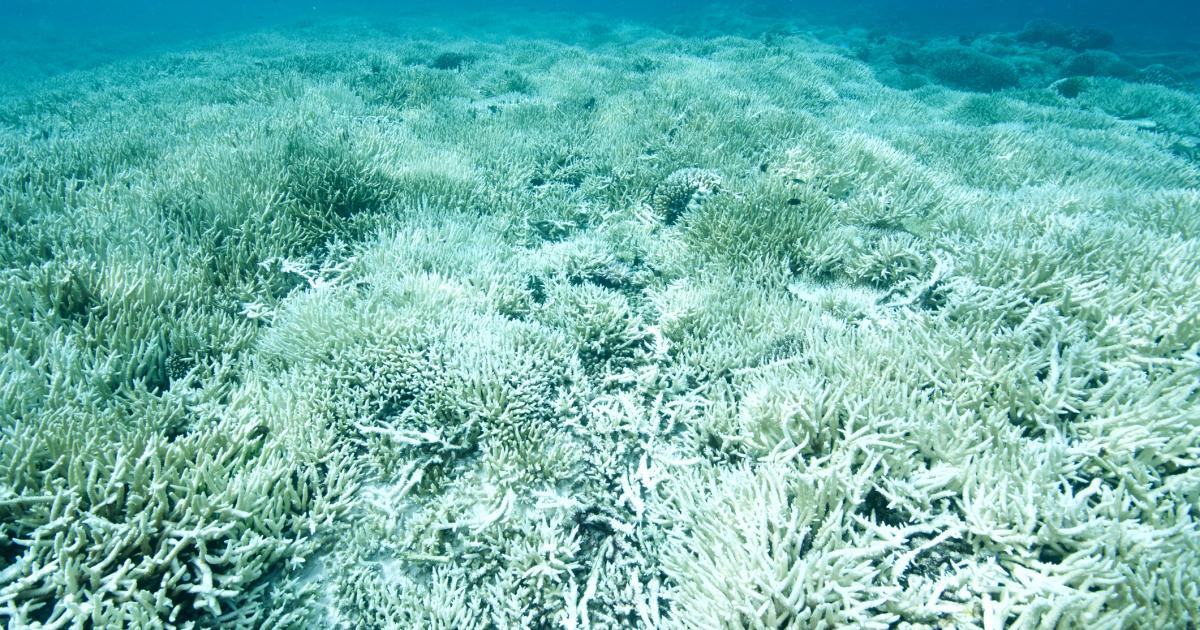
A recent article (2 October 2025) from the Directorate-General for Environment reports that the ocean has now breached its safe planetary boundary for acidification. Rising carbon dioxide emissions from fossil fuels are altering the chemistry of seawater, making it around 30% more acidic (which strictly means about a 30% increase in hydrogen ion concentration) than before the Industrial Revolution, and threatening marine life - especially coral reefs and shell-forming species. This breach adds to a growing list of Earth-system boundaries that are already crossed.
Reflection:
The ocean isn’t just warming; it’s changing chemically, quietly and deeply. Reading this reminded me of the idea of the snowline in the ocean: a boundary moving upward toward the surface as acidification pushes the carbonate compensation depth (CCD) shallower. Research shows the CCD has risen by ~98 m since the industrial era, meaning more of the seafloor now lies below the level where calcium carbonate, the material of shells and coral skeletons, can remain stable (in simple terms, the “safe zone” for shell-forming life is shrinking upward as deeper waters become too acidic for shells to survive).
This mirrors what’s happening on land: as the atmosphere warms, the mountain snowlines move upward too, exposing more and more ground that once stayed frozen. Both are measurable shifts, yet still difficult to comprehend. And in both realms, the “rising line” marks shrinking zones where life can endure.
The article clearly signals urgency but could do more to explain how this chemistry works (CO₂ uptake → lower pH → fewer carbonate ions → shell dissolution) and to emphasize that acidification compounds with other pressures such as warming and de-oxygenation. Some seas absorb these changes faster, and some species cope better, but for many, the combined stress exceeds what evolution can match. We also need more stories that connect global chemistry to the lived realities of coastal communities and marine life.
Reference:
Directorate-General for Environment. (2025) Ocean acidification: Seventh planetary boundary now crossed. 2 October 2025. Available at:

(Accessed: 20 October 2025)
Side-note / link:
For more on the “snowline in the ocean” concept see: Harris, P.T. et al. (2023) Rising snow line: Ocean acidification and the submergence of seafloor geomorphic features beneath a rising carbonate compensation depth. https://www.sciencedirect.com/science/article/pii/S0025322723001330?via%3Dihub
2. Migration Shifts - Not Exactly Smoke Signals from the Skies
A recent Guardian feature (16 October 2025) visualises how climate change is affecting bird migration across the globe. Using satellite and GPS data for species such as the Desertas petrel, nightingale, and Bewick’s swan, it shows how each responds differently to warming, drought, and altered wind and storm patterns. Some, like the swans, now shorten their journeys to ice-free wetlands, while others, such as the nightingale, face greater risks from drought and habitat loss in both Europe and Africa.
The visuals are stunning, a moving reminder that these migrations are among the most beautiful and fragile patterns of life on Earth. The piece makes scientific tracking data both emotional and understandable, letting the reader see how the planet’s heartbeat is changing.
Reflection:
The article captures the wonder and danger of migration in a warming world, but it focuses mainly on individual species. While it’s powerful to show contrasting examples - a seabird, a songbird, and a swan, with each relying on different habitats and diets - the feature could have gone further by connecting their stories through pressures they all share. These include shifting insect cycles, changing wind patterns, and the loss of stopover habitats that affect many migratory species at once. It also doesn’t explore how conservation efforts are responding, for example through protected flyways or rewilding corridors.
The reporting simplifies the biology a little. Migration is not only about temperature; it’s also about timing, food availability, and ecological relationships. When warming drives predators northward or shifts their timing ahead of the species they hunt, breeding success and food web balance are disrupted. Ground-nesting birds, for instance, face higher egg and chick losses as new predators expand into their range. Over time, these mismatches have far-reaching consequences, weakening the resilience of entire ecosystems. Understanding this is important, because it often determines if a species can adapt or begins to decline.
Overall, the piece is a fascinating and accessible translation of complex data into story form. It shows how science communication can inspire empathy, even for distant species. As one image shows a petrel chasing a hurricane, the reader can sense both the intelligence of adaptation and the edge of survival.
Reference:
The Guardian. (2025) Bird migration is changing: what does this reveal about our planet? – visualised. 16 October 2025. Available at: Bird migration is changing. What does this reveal about our planet? – visualised (Accessed: 20 October 2025).
3. Typhoon Halong – Alaska’s Unseasonal Storm
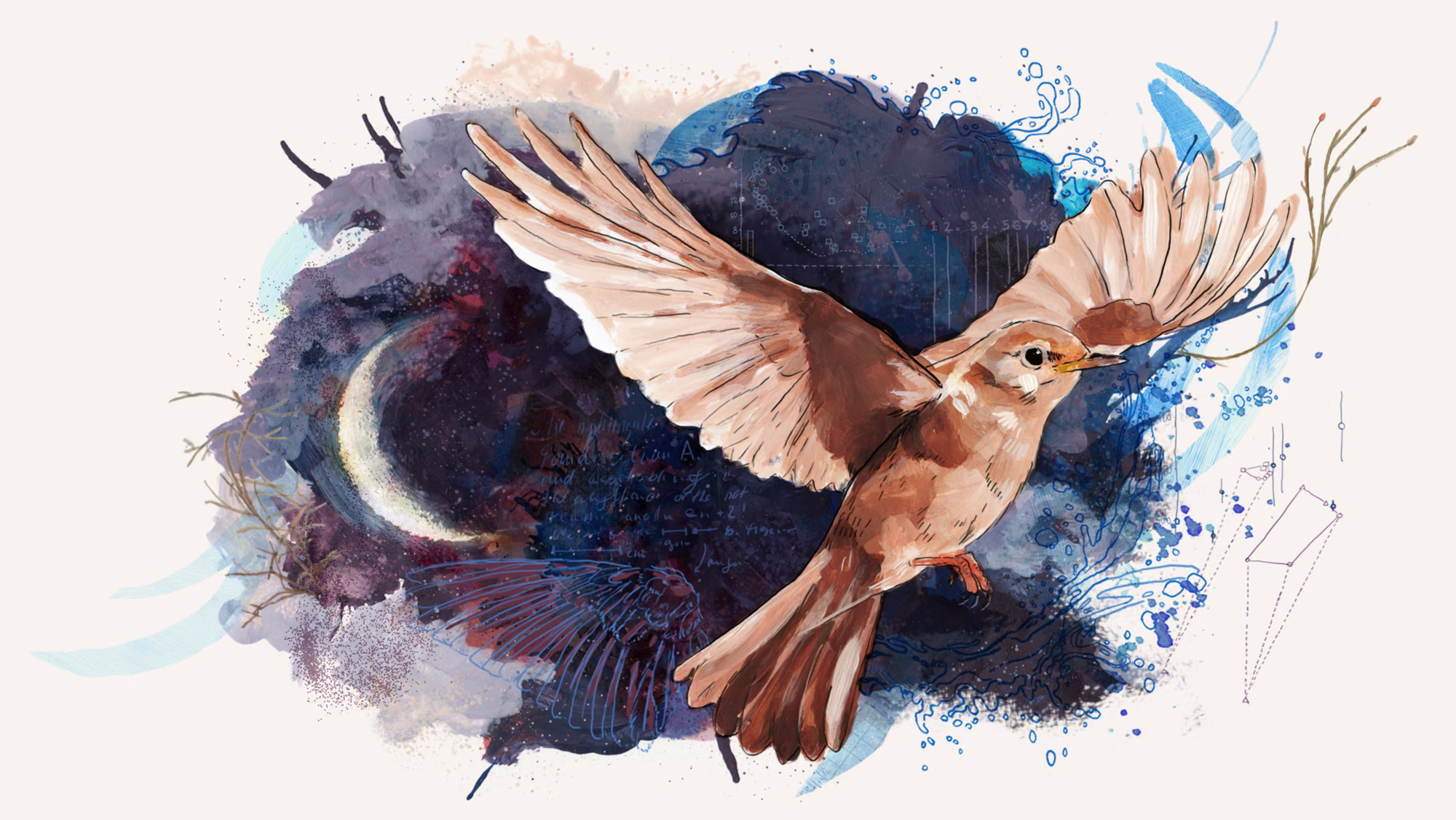
A Guardian report (20 October 2025) documents the aftermath of Typhoon Halong, an unusually powerful late-season storm that battered southwest Alaska with record winds and flooding. The system, fed by warmer-than-average ocean temperatures, made landfall far north of where such storms historically occur. Communities along the Yukon–Kuskokwim Delta and the Bering Sea coast suffered severe erosion, damaged homes, and disrupted subsistence hunting and fishing.
Scientists quoted in the piece link the storm’s intensity to the rapid warming of northern seas and the loss of sea ice, which together create open-water fetch for larger waves and amplify coastal flooding. This is compounded by thawing permafrost, which weakens the very ground on which villages stand. The article also notes the high cost and slow pace of recovery for rural communities where supply lines are fragile and rebuilding is limited by winter’s early return.
Reflection:
This article stands out for showing how the Arctic is not just melting, but it’s destabilizing. Typhoon Halong is something in between tropical and polar weather, a warning that the planet’s “climate zones” are no longer predictable boundaries. The coverage in this article is scientifically grounded and locally focused, quoting Indigenous residents who describe the loss of food security and cultural continuity as ice conditions change.
It might have strengthened the analysis by linking to attribution studies quantifying how much warmer seas increased the storm’s power or by comparing Alaska’s experience with global storm trends. Still, the story powerfully conveys how climate change translates into lived disruption. Not future projections but current reality.
Reference:
The Guardian. (2025) Alaska struggles to recover as record typhoon batters southwest coast. 20 October 2025. Available at: Alaska communities devastated by severe storm could take years to recover (Accessed: 20 October 2025).