Nature’s Gift in Motion

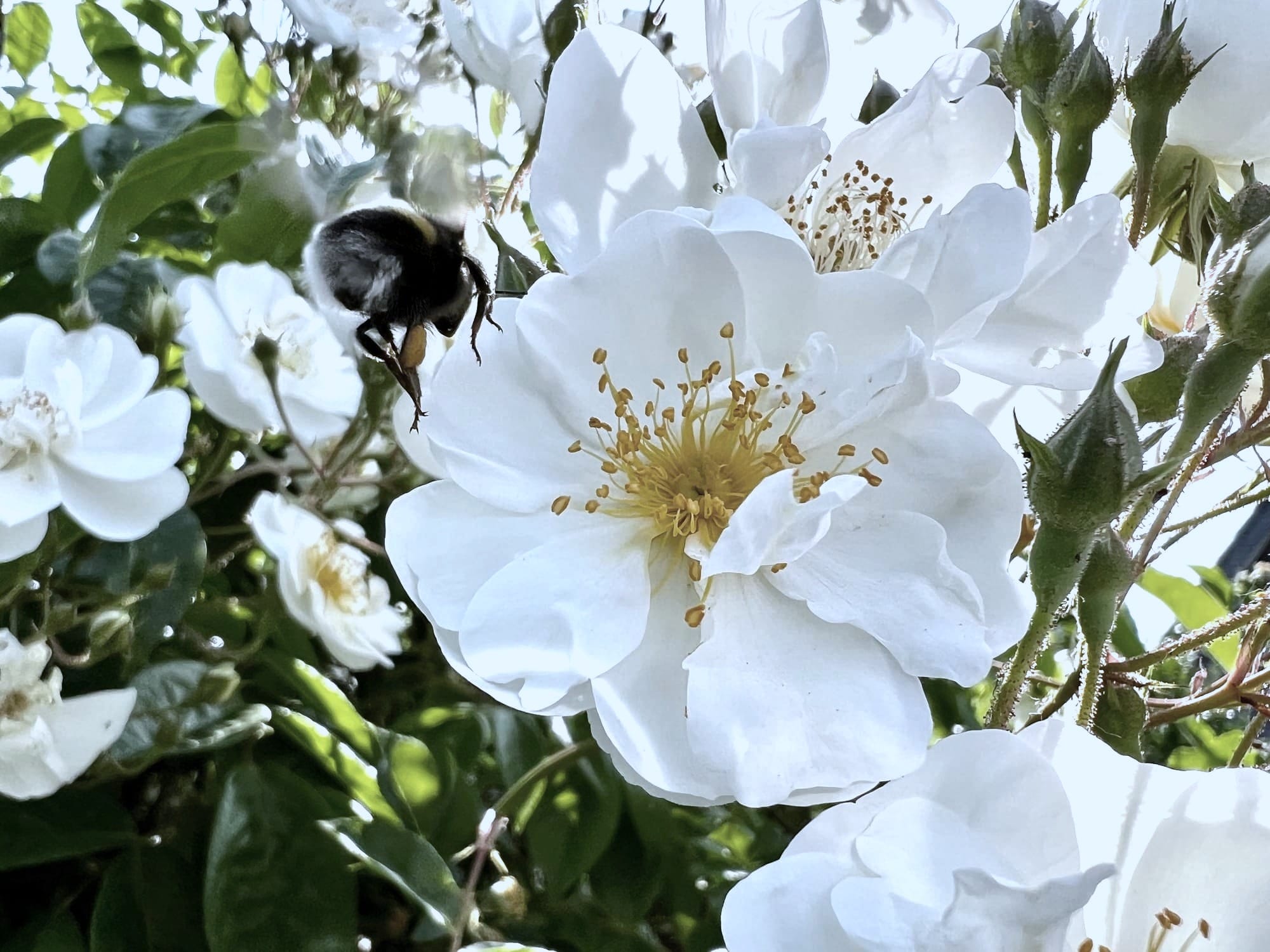
Degrowth, Reciprocity, and the Climate Crisis as a Circulation Problem
Both Timothée Parrique and Robin Wall Kimmerer invite us to fundamentally rethink our relationship with growth, nature, and each other. In their respective podcast conversations – Parrique’s “Slow Down or Die” on Upstream (hosted by Della Z. Duncan and Robert R. Raymond) and Kimmerer’s “The Land Loves You Back” on The Nature Of (hosted by Willow Defebaugh) – they critique the entrenched scarcity mindset under capitalism and offer a vision of abundance, reciprocity, and shared well-being.
Their insights converge on a powerful idea: addressing the climate crisis and building a true legacy requires reimagining value and reweaving our participation in the community of life. This synthesis unpacks their core themes – from degrowth and gift economies to time, democracy, and ecological reciprocity – and shows how these perspectives resonate together as antidotes to hyper-individualist fantasies of endless growth or personal immortality.
Challenging the Myth of Scarcity vs. Embracing Abundance
One of the first common threads is a sharp critique of capitalist scarcity and a reframing of abundance in nature. Parrique, a degrowth economist, points out that society has normalized an “ideology of growth”: an endless pursuit of more at the levels of individuals, businesses, and nations. This growth-at-all-costs mentality is premised on the notion that there’s never enough, that success means perpetual expansion. Kimmerer, an Indigenous scientist, notes that even the definition of economics reflects this bias: “the American Economic Association defines economics as the study of scarcity”. She and Parrique both ask us to question this story of lack. After all, on a finite planet, endless growth is not only impossible but deeply “antagonistic to human and planetary health”.
In contrast, nature operates on principles of plenty and renewal – if we align with them. Kimmerer illustrates that “abundance is the currency when you see everything as a gift and everything is shared”. In ecosystems, wealth is not hoarded; it circulates. For example, the serviceberry bush transforms sunlight, water, and soil into sweet berries and then gives them away to birds – “they don’t keep the berries… they give them away to the birds,” who in turn help spread the seeds, benefiting the plant. In this gift economy of nature, “abundance comes through sharing… not from hoarding”. Such stories directly challenge the zero-sum logic of capitalism. As Kimmerer’s interviewer Willow Defebaugh observes, what could be more different from a scarcity-driven market than a worldview where generosity and gift-giving are the source of richness?
Parrique’s degrowth perspective aligns with this abundance mindset by insisting that we have enough — if it’s distributed well and used wisely. Degrowth, as Parrique describes it, is a two-fold project: “downscale production and consumption for environmental reasons” and remove the profit motive from its pedestal in society. In practical terms, that means focusing the economy on sufficiency and equity instead of endless accumulation. He emphasizes asking “what do we really need to have a good life? That’s the question of sufficiency… what is enough?”. Both he and Kimmerer suggest that if we redefine “enough,” we discover plenty. Kimmerer even provides a pragmatic entry point: “What do you have in abundance? … That’s what you share”. Whether it’s excess fruit, extra books, or a bit of free time, our surpluses can become gifts that strengthen the whole community rather than private stockpiles. In this way, degrowth’s call for moderation and Kimmerer’s call for generosity both replace the myth of scarcity with a vision of interdependence and shared abundance.
Degrowth: Slowing Down to Thrive (Time, Democracy, and Justice)
Parrique’s degrowth argument, captured by the provocative phrase “slow down or die,” speaks to the dire stakes of clinging to perpetual growth. He reminds us that heedless growth will eventually collide with ecological limits, so we must consciously slow our economic metabolism to avoid breakdown. But degrowth is not about plunging into deprivation; it’s about building a different kind of prosperity. Parrique and the Upstream hosts distinguish degrowth from an uncontrolled recession – instead of chaos and hardship, degrowth is a planned, equitable contraction of throughput that improves well-being. For instance, rather than measure success by ever-rising GDP, we would judge it by metrics of health, happiness, equality, and ecological balance. “Endless growth” has served as a false stand-in for progress, but degrowth demands we redefine progress itself. As Parrique puts it, this means “re-politiciz[ing] the use of our time” and collectively deciding what truly matters in life.
A striking aspect of Parrique’s vision is how it links economic change to democratic revival and personal liberation. In a growth-obsessed system, most of our time and energy is commodified – “as people dedicate more and more time to [producing] monetary commodities, they use less of their time to do something else… that can become a problem” for society. Degrowth flips this script by freeing up time that has been hijacked by the rat race. Parrique imagines a world with “no advertising” and far fewer needless jobs, where we “work radically less” and no longer chase productivity for its own sake. Importantly, this reduction in work-hours is managed in a just way: as harmful or wasteful industries wind down, workers transition to other sectors or simply enjoy more leisure, rather than being cast aside. Society could choose to spread necessary work more evenly (for example, instead of a few working overtime while others are jobless, everyone works a bit less). The result is not drudgery in the fields (as critics claim) but greater freedom. In Parrique’s words, we should harness technological progress “to be lazy and lazier”, using efficiency gains to increase free time instead of output.
What would people do with this liberated time? Parrique paints a vivid picture: we’d spend more time “strengthening our democracy, doing street theater, making films, writing books, having naps, taking care of our kids” – all the human activities of art, care, civic engagement and rest that make life rich. Instead of life being a treadmill of work-and-consume, it becomes a space for democratic participation, creativity, and community. This point is crucial: democracy itself flourishes when citizens have the time and energy to get involved. (As Parrique notes, a healthy political system requires people to have time to devote outside of mere survival or paid labor.) In a degrown society, communities can make inclusive decisions about how to allocate resources, ensuring needs are met without excess. Imagine local assemblies deciding how to use vacant lots for gardens or solar farms, or workers co-owning companies so that profit isn’t the only goal. Parrique describes creating multi-stakeholder cooperatives where every affected party – workers, neighbors, the environment – has a say, leading to more balanced outcomes than a corporation chasing profit alone. This democratic reorientation goes hand in hand with economic justice: degrowth advocates that wealthy nations and elites scale back consumption so that the poor can have more. “Some economic growth may be needed” in parts of the Global South (after centuries of underdevelopment by the North), “but for the majority of the Global North, degrowth… is a necessity”. In other words, fairness and solidarity are at the heart of degrowth – a planned slowdown to secure well-being for all within the planet’s means.
Ultimately, Parrique’s message is optimistic: if we slow down wisely, we don’t die – we start truly living. He envisions a post-growth world where “our needs are met equitably and we have flourishing lives… and the environment around us is flourishing” because we live within our ecological limits. Instead of measuring legacy in dollars or GDP, it’s measured in quality of life and a healthy planet. This is a legacy of justice: both social (equity across communities and generations) and ecological (respect for Earth’s boundaries). As Parrique quips, trying to live simply in a growth-driven culture is “as difficult as playing Grand Theft Auto without committing a crime” – the system almost forces bad outcomes. Degrowth is about changing the rules of the game so that the good life (simplicity, sufficiency, care) is no longer swimming against the current, but the new normal.
The Gift Economy and Ecological Reciprocity: “The Land Loves You Back”
Where Parrique focuses on macroeconomics and time, Robin Wall Kimmerer frames the transformation at the level of culture and relationship with nature. In her podcast interview, titled “The Land Loves You Back,” she emphasizes learning from nature, not just about it. Kimmerer’s core insight is the power of the gift economy as practiced both in healthy human communities and in ecosystems. In her Potawatomi tradition and scientific observation alike, the Earth is viewed as a generous teacher offering gifts – and humans are expected to reciprocate those gifts, not exploit them. “What if we saw everything as a gift?” she asks. We might then feel “our membership in the web of reciprocity” and act accordingly.
Kimmerer provides vivid examples to contrast the gift economy of abundance with the market economy of scarcity. In addition to the serviceberry story of mutualism mentioned earlier, she recounts anthropological insights into hunter-gatherer sharing. In one Amazonian community, a successful hunter never hoards meat from a kill; there’s too much to eat at once and it would only spoil. Instead of stockpiling, the logic is relational — as one person puts it: “Store my meat? I store my meat in the belly of my brother.” In other words: nourishment is kept “safe” by being distributed through kinship and community. The hunter gives freely, “passing on the gift” of nature’s bounty, and in return earns respect, gratitude, and reciprocal help down the line. As Kimmerer explains, “food security… came not from hoarding… [but] abundance” shared through the community. In such a system, “the currency of a gift economy is respect and gratitude”, not dollars. This could not be more different from capitalism’s competitive individualism. In Kimmerer’s words, “what could be more of a contrast” to the AEA’s scarcity paradigm than an economy where “everything is shared as a gift” and abundance grows by being given away?
Crucially, participation in a gift economy requires relationships and trust, which our modern society has in many ways eroded. Defebaugh and Kimmerer agree that hyper-individualism and digital life have left many of us lonely and estranged from neighbors. Rebuilding community is both a precondition and a joyful result of embracing reciprocity. “You have to be in relationship because you have to… know what you have in abundance, and [know] your neighbors’ needs,” she explains. That means reknitting the bonds between people: “We have broken those bonds, and they feel so good when you reknit them.”
In practical terms, Kimmerer and Defebaugh discuss simple acts like starting a community garden or a firewood-sharing party – inviting neighbors to cut wood together and share a meal. The forest’s gift of firewood then warms many homes, and the work becomes more of a celebration than a transaction. These acts have a double benefit: they care for the land and heal the social fabric. In fact, communal sharing is an antidote to the “modern loneliness epidemic” – it replaces isolation with belonging and mutual aid. As Defebaugh remarks, when problems are interconnected, “so are the solutions”. A gift culture addresses environmental sustainability and social well-being in one stroke.
Kimmerer also tackles the cynical narrative that humans can’t be trusted to share (famously embodied in Garrett Hardin’s “Tragedy of the Commons” theory). That story assumes individuals will always exploit communal resources, so privatization or strict top-down control are the only options. Kimmerer challenges us to ask, “What if that’s wrong?”. After all, plenty of traditional and contemporary communities have managed commons through trust and norms of fairness. The tragedy narrative is not a law, but a story – and “stories can change”. She notes that many of our current systems rest on hidden stories, like the idea that “competition and survival of the fittest” must rule all life. But those are not the only stories of nature or humanity. In reality, cooperation and symbiosis are just as fundamental in nature’s economy. “Our oldest teachers are growing at our feet,” Kimmerer says, if only we listen to what plants and animals demonstrate about reciprocity.
At the heart of Kimmerer’s philosophy is reciprocal gratitude – summed up in her beautiful phrase, “all flourishing is mutual.” In the podcast she describes the “joyful responsibility” of humans to give back to the land for all we receive: “In return for all this food and water and beauty and bird music… my act of gratitude is to keep it going.” To her, the sacred lies in the act of sustaining life. Every day, the Earth gifts us sunlight, air, water, nourishment, beauty. A meaningful life – and a just one – is defined by how we reciprocate these gifts so that “life keeps going”. This could mean restoring a wetland, protecting a patch of forest, or simply gardening with care. “Isn’t it our sacred responsibility, and… a joy, to help nurture it?” Kimmerer asks, rhetorically. There is “nothing more important and soul-filling” than this work of caretaking the web of life, which gives people a profound sense of purpose and belonging.
Kimmerer’s worldview directly addresses issues of ecological justice and unity as well. She believes a shared love of land can bridge deep social divides. “When we’re looking for common ground, what could be more common than the ground?” she quips. Everyone depends on clean water and fertile soil, regardless of political or cultural differences. A tree, she notes, “doesn’t ask you how you voted before they let you have an apple”. In her community in rural upstate New York, she observes that even neighbors with opposing political views “love their land so much” and “want land that their grandchildren can farm”. There is latent agreement across the spectrum that “it is wrong to wreck the world”. By starting from that shared value – the generosity of Earth and the desire to protect it – Kimmerer sees potential for a unifying movement. This insight is powerful in a time of polarization: care for the land can be a nonpartisan common denominator. It shifts the focus from abstract ideologies to the concrete legacy of “will our grandchildren inherit thriving farms and forests?” Questions of justice (including intergenerational justice) then become personal and actionable: we work together because we all want to leave a living, loving planet to those who come after us.
Climate Change as a Circulation Problem: Restoring the “Gift in Motion”
Taken together, Parrique’s degrowth economics and Kimmerer’s gift ecology suggest that the climate crisis is fundamentally a problem of broken circulation. Our current system behaves like a one-way pipeline: extract resources, burn them for short-term gain, and dump the waste (like CO₂) without regard for natural cycles. Money and power pool in a few hands instead of flowing through communities. In essence, the gifts of the Earth have been taken without reciprocity, leading to imbalance – an atmospheric carbon overload, depleted soils and forests, and stark inequalities. The solution, these thinkers and practitioners imply, is to re-establish healthy flows: of carbon, of resources, of wealth, of care.
Dr. Kimmerer offers a potent metaphor here, and the way it arrives matters. In the conversation, Willow Defebaugh brings up leafcutter ants, describing the visible flow of life moving through a forest system; Kimmerer responds by naming it: “Oh, that’s the gift in motion.” The ants prune foliage (which helps the plants), carry it to nourish their fungal gardens (food for the colony), and ultimately return nutrients to the soil — not as waste, but in order to complete the loop. Then Defebaugh reflects on why the phrase lands: you watch beings participate in a shared flow, a procession of value moving through relationship rather than possession. This is what a living “economy” looks like when it’s not trying to become a vault.
And wolves belong here too, not as an aesthetic add-on, but as another teacher of circulation. Anyone who has watched wolves on a winter landscape knows this: the return, the revisiting, the careful use. A carcass in the snow is not “leftovers”; it’s a node in a network. Wolves don’t just consume — they move nourishment through the pack, distribute value through relationship, and (by what they leave behind) feed ravens, foxes, beetles, microbes, soil. The kill becomes a redistribution event. In that sense, a wolf on a snowy carcass is another form of “gift in motion”: energy moving through bodies, kin, and ecosystems — nothing wasted, nothing owned, everything participating.
Humanity’s challenge in the climate era is to realign our economy with this circulatory wisdom. Parrique’s degrowth ideas directly speak to that: for instance, he advocates shifting from a linear, extractive economy (take→make→waste) to what he calls a “quality-based, convivialist economy” where efficiency gains are reinvested in well-being (like time for naps) rather than more consumption. In practical terms, that means developing circular systems: durable goods, repair and reuse, renewable energy, local self-sufficiency, and sharing networks – all of which keep materials and value circulating rather than being used up and thrown away. It also means circulating resources more fairly among people: instead of a few accumulating obscene fortunes (or carbon footprints) while others have too little, degrowth leans into redistribution and relocalization. This parallels what Kimmerer describes in gift economies where “abundance comes through sharing the abundance”. Both visions replace the current dead-end flow (where wealth and carbon concentrate to a dangerous degree) with regenerative cycles. In many ways, healing the climate is about putting the “gift” back in motion – e.g., planting trees and restoring wetlands to draw carbon back down, cycling nutrients through composting and regenerative agriculture, and ensuring excess resources reach those who need them.
Kimmerer explicitly links climate action to this principle through her initiative Plant, Baby, Plant. It’s a rallying cry to “flip the script” from “Drill, Baby, Drill” to “Plant, Baby, Plant” – in other words, to move from extracting and burning to planting and regenerating. This grassroots movement encourages people to join in Earth’s own work of carbon sequestration by planting trees and native plants everywhere possible. Kimmerer cites estimates that about “30% of the work… taking carbon out of the atmosphere can be done with nature-based solutions”, i.e. restoring ecosystems. While the remaining 70% requires phasing out fossil fuels and high-tech solutions, that 30% is huge – and it’s joyful, local, participatory work. In her view, this is not just about offsetting carbon; it’s about healing our relationship with the land. “The story that is flowing to us [from the status quo] is of extraction… as if the Earth was our property, as if we were only takers,” Kimmerer says. By contrast, “we can ally ourselves with the natural world… be part of healing the land and healing the story.” Climate change, then, is not only a technical problem but a narrative and relational problem: we need to move from a story of taking and entitlement to a story of giving and humility.
Justice, too, is a matter of circulation. Parrique’s emphasis on the Global South’s right to develop and the Global North’s duty to scale back is about balancing the flow of resources and emissions on a planetary scale. It’s an attempt to rectify centuries of unequal exchange (colonial extraction, carbon colonialism) by redirecting wealth and carbon space to where it’s needed for human dignity. Kimmerer’s emphasis on including everyone – farmers, hunters, city-dwellers, left and right – in the climate movement is about ensuring participation flows across social divides. No one can be left out of the circle of solutions; otherwise, the circle breaks. In a healthy circulatory system (whether ecological or social), blockages are dangerous – a truth apparent in everything from clogged arteries to concentration of greenhouse gases. The takeaway is that climate change can be understood as a symptom of a blocked, unbalanced flow: too much carbon in the air, too much wealth at the top, too many people excluded from decision-making. The remedies proposed by Parrique and Kimmerer restore flow: they seek to unblock the arteries of the Earth, letting life-sustaining exchanges move freely again.
Parrique gives us the structural argument (time, sufficiency, redistribution). Kimmerer gives us the relational ethic (gift, reciprocity, gratitude). If climate breakdown is a circulation failure, then power itself can be reimagined as circulation restored. And this is where imagining the inversion of the term “spheres of influence” becomes powerful. The dominant geopolitical phrase points to influence through coercion, extraction, leverage, scarcity. But what if we named another kind: spheres of influence that arise through co-circulating abundance? Not “my power over you,” but “our capacity to keep life moving.” In that framing, influence isn’t what you can withhold — it’s what you can help regenerate: food security, energy resilience, water commons, local care systems, knowledge, habitat. The “sphere” becomes a circle of reciprocity, expanding not by domination, but by shared surplus and mutual aid: abundance as diplomacy.
Rethinking Legacy: Interdependence vs. Immortality Fantasies
Underlying the discussions of degrowth and gift economies is a profound rethinking of what it means to leave a legacy and to achieve a meaningful kind of “success” or continuity in our lives. Both Parrique and Kimmerer advocate for a legacy measured not by personal accumulation or individual escape from mortality, but by the well-being of the community and land we’re part of. This stands in stark contrast to the hyper-individualist fantasies of immortality that have captured the imaginations of some in our capitalist, tech-driven culture – for example, billionaires funding projects to upload their consciousness or “escape” to Mars, or the general ethos of living on through wealth, monuments, or even digital avatars.
Such fantasies, at their core, still operate in the logic of separation and scarcity: the individual self must be preserved against the limits of nature, often at the expense of others or the Earth. Parrique and Kimmerer’s philosophies suggest this is not only unattainable but undesirable. As Parrique wryly notes, society seems more able to imagine the end of the world than the end of capitalism – a quip (referencing a common adage) that highlights how fixated we are on clinging to the status quo or our individual advantages, even as the world burns. Instead, he urges us to “muscle up our utopian thinking” and imagine truly different futures. That includes letting go of the capitalist idea that we each must “win” alone (whether that means infinite wealth or literal immortality). Degrowth’s vision of success is collective and regenerative: if we manage to “slow down” in the wealthy world and reinvest in community, the reward is not living forever, but everyone living better. It is the satisfaction of seeing “our needs met equitably,” our society flourishing in creativity and leisure, and our planet healing. In a sense, this is a legacy of living on through others: through a healthier climate and through the continuation of culture and relationships we nourished. Your name might not be on a skyscraper or a server in 500 years, but your actions today would live on in the stories, gardens, and forests of tomorrow.
Dr. Kimmerer provides a deeply emotional perspective on legacy. She speaks as both a scientist and an Indigenous woman mindful of seven generations. In the interview, she recounts telling a student how sorry she felt that the younger generation still has to fight the environmental battles that her own generation hoped to resolve decades ago. The student’s response was a revelation: “Don’t you know... this is the best possible time to be alive?” – meaning that right now, on the brink of ecological crises, is when our choices matter the most. We have the chance to “raise a ruckus” and a garden at the same time – to stand up for life when it truly counts. Legacy, in this light, is not about personal survival but about purpose. As Kimmerer’s student implied, there is meaning in being here for the Great Turning (however perilous it is) because our contributions now will echo for generations. This is a narrative of legacy diametrically opposed to the Silicon Valley idea of digitally cloning oneself. It’s not about escaping death; it’s about ensuring life continues.
In Kimmerer’s words, selling the Earth for short-term gain puts us in “spiritual jeopardy” – a strong phrase that suggests a soul-level failure. She asks pointedly: “Is it really possible to sell the gifts that the Earth gives us without spiritual jeopardy?” The implied answer is no. If we commodify everything, if we prioritize our individual profit or extension at all costs, we risk losing something essential in ourselves. The inverse of that, the healed state, is to recognize our role as grateful recipients and responsible givers. When we fulfill “our responsibilities as a human in this beautiful gift exchange,” as Kimmerer says, we can hold our head up high. She describes how doing restoration work allowed her to “look the forest in the eye again” without shame, able to say “I’m doing my best here. I see you... I’m fulfilling my responsibilities”. To “look the land in the eye and say, ‘We’re good’” – imagine that as one’s legacy. It’s a quiet, profound sense of balance between a person and their home. It means you have given back as much as you received; you are not a net taker. That feeling, Kimmerer muses, is something “I just wish for everybody”.
If all flourishing is mutual, then so is all true legacy. Parrique and Kimmerer both stress interdependence over independence. A culture of hyper-individualism may dream of immortality in a machine or fleeing to a new planet, but it overlooks the simpler, richer form of immortality we have access to: living on through community and nature. Planting a tree is a kind of immortality; teaching the next generation is a kind of immortality; contributing to a tradition or a body of knowledge is a kind of immortality. These are legacies that enlarge life rather than trying to freeze it. By contrast, the billionaire’s quest to cheat death often comes at the cost of ignoring the living — those resources might have saved lives or restored ecosystems here and now. Kimmerer’s ethic of reciprocity suggests that our legacy is literally the world we leave behind. The land remembers how we treat it. Our descendants (human and more-than-human) will inherit the results of our choices. Will they say we loved the Earth, or only ourselves?
In sum, Parrique and Kimmerer invite us to step off the hamster wheel of “more, more, more” and instead step into a circle – the circle of enough, the circle of reciprocity, the council circle of democracy, the cycles of the seasons. They are, each in their own way, storytellers crafting a new narrative for our time. Parrique helps us envision an economy where value is measured in well-being and time well spent, not endless production. Kimmerer helps us envision a culture where value is measured in generosity and gratitude, not price tags. Both strip away the illusion that selfish, unbridled growth can make us safe or immortal. Instead, they show that our security and longevity as a species come from sharing, not hoarding; from slowing down, not speeding up; from remembering we are nature, not above it.
To tie it back to the climate crisis: if climate change is a “circulation problem,” then the remedy is to circulate life back into our systems – economic, social, spiritual. That means circulating resources to where they’re needed, circulating power back to communities, and circulating our gifts freely. It means, fundamentally, trusting in abundance and reciprocity over fear of scarcity. Parrique’s degrowth gives us a policy roadmap to scale down and redistribute, and Kimmerer’s wisdom gives us an ethical compass to reconnect and restore. Paired together, their ideas resonate deeply: they remind us that the legacy worth fighting for is a living planet and a just society, where the land loves us back because we finally remembered to love the land.
Key Takeaways and Shared Insights
- From Scarcity to Abundance: Both Parrique and Kimmerer reject the myth of scarcity that underpins capitalist growth. Parrique argues that “endless growth is impossible on a finite planet” and urges a shift to sufficiency, while Kimmerer shows that “abundance is the currency when... everything is shared as a gift”. Bottom line: True prosperity comes from enough for all, not all for oneself.
- Degrowth & Gift Economy – Different Paths, Same Goal: Degrowth proposes slowing down production and consumption to live within our ecological means while improving quality of life (more free time, more equality). The gift economy proposes deepening our relationships and sharing our gifts (from food to time) to strengthen community and ecological health. Both approaches converge on re-centering value in life, not profit. They foster cooperation, sufficiency, and trust as the basis of a sustainable society.
- Time, Democracy, and Participation: A key theme is reclaiming time for what matters. Parrique envisions using productivity gains to shorten the workweek and “turn efficiency gains into... the liberation of free time”. This free time enables richer participation in democracy, art, caregiving, and rest. Kimmerer likewise emphasizes that participating in a gift economy or restoration work requires knowing each other and rebuilding social bonds, which counteracts isolation. Takeaway: A sustainable future gives people the time to connect – with each other and with nature – as active citizens, not just busy consumers.
- Ecological Reciprocity and Justice: Both speakers highlight reciprocity as justice. Kimmerer’s principle that “all flourishing is mutual” encapsulates the idea that human prosperity is inseparable from the Earth’s prosperity. We have a responsibility to give back for what we take, which is both a moral duty and a source of joy. Parrique’s degrowth insists on global equity – the rich must consume less so the poor can have enough – and on designing the downscaling in a fair, democratic way. In practice: Climate and economic solutions must be just and inclusive, honoring our obligations to the less privileged and to future generations.
- Climate Change as a Circulation Issue: Viewing climate change as a circulation problem helps integrate these ideas. Kimmerer’s “gift in motion” metaphor of leafcutter ants illustrates the beauty of a circular, regenerative flow in nature. Parrique’s degrowth calls for a circular economy that stops turning resources into waste and instead keeps the gifts flowing for future use. Both see that we must unblock the flows – of carbon, of resources, of compassion – that have been stuck by greed. Simply put: We need to circulate value (and carbon) in cycles rather than accumulate it destructively. Regeneration and sharing are the cures for the current imbalance.
- Redefining Legacy: Finally, these perspectives ask us to redefine what legacy means. Instead of the hyper-individualist quest to cheat death (through wealth, technology, or fame), true legacy is found in what we nurture and leave behind for others. Kimmerer’s story of looking the forest in the eye and saying “we’re good” speaks to leaving with a clear conscience, having done right by the land. Parrique’s vision of a post-growth society implies a legacy of stable climate, meaningful work, and vibrant community – a world where our children and grandchildren can thrive. In contrast to “immortality fantasies,” which often ignore everyone else, Kimmerer and Parrique’s ideas show that we live on through interdependence. By investing in relationships – with people and place – we create something that lasts far beyond an individual lifespan.
Both “Slow Down or Die” and “The Land Loves You Back” remind us that the way we treat each other and the Earth today will become tomorrow’s legacy. Parrique’s economic pragmatism and Kimmerer’s ecological wisdom, when paired, offer a compelling roadmap and heart-map for a future where value is shared, time is ample, nature is respected, and no one is left behind. It’s a future grounded not in fear of loss, but in trust in the reciprocal abundance that emerges when we, at last, decide to slow down and remember that the land truly loves us back.
Sources & Listening Links
Prefer listening? These episodes are available on most podcast platforms. The official episode pages below include listening options.
Podcast shows


Upstream (podcast) — Official site: https://www.upstreampodcast.org/


The Nature Of (podcast, Atmos) — Official show page: https://atmos.earth/podcast/
Episodes referenced
Upstream — “Slow Down or Die” (with Timothée Parrique)
(Optional: Apple Podcasts link: https://podcasts.apple.com/us/podcast/slow-down-or-die-w-timoth%C3%A9e-parrique/id1082594532?i=1000732746451)


The Nature Of — “Robin Wall Kimmerer: The Land Loves You Back” (hosted by Willow Defebaugh)
Optional: YouTube version: https://youtu.be/hZGSlSD58Ok
Transcript sources (for quoted passages)
- Upstream — “Slow Down or Die” transcript/searchable text
 Upstream
Tapesearch episode page (includes transcript tools): https://www.tapesearch.com/episode/slow-down-or-die-w-timoth%C3%A9e-parrique/nZdsvNdMpcS9Z77QRF24X3
(Additional transcript mirror: PodScripts: https://podscripts.co/podcasts/upstream/slow-down-or-die-w-timothee-parrique/)
- The Nature Of — “The Land Loves You Back” transcript/source material


Atmos episode page (primary): https://atmos.earth/podcast/robin-wall-kimmerer-the-land-loves-you-back/
(Optional: YouTube: https://youtu.be/hZGSlSD58Ok)
People & projects mentioned
 tparrique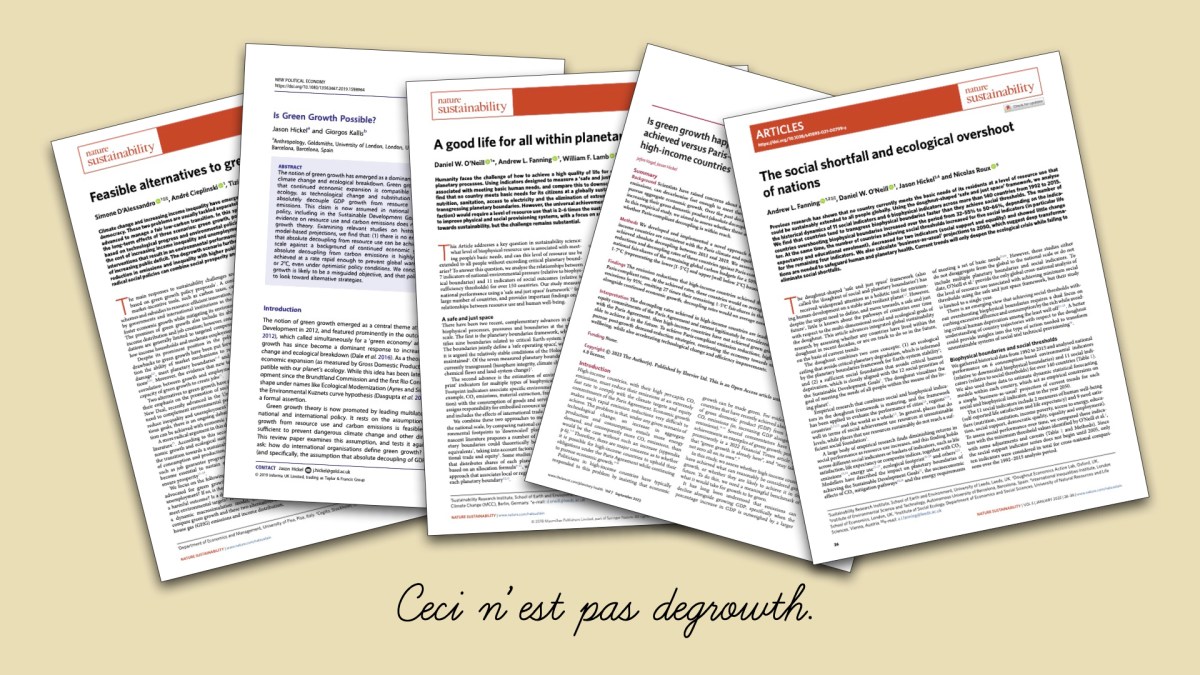
Timothée Parrique — https://timotheeparrique.com/
 0
0
Robin Wall Kimmerer — https://www.robinwallkimmerer.com/


Robin Wall Kimmerer's grassroots movement Plant, Baby, Plant — https://plantbabyplant.com/


Della Z. Duncan — https://www.dellazduncan.com/