The Question, Asking Itself Through Many Beings

a polyphonic listening exercise
We often talk about connection and care as if more empathy alone could heal the world. But beneath the surface, the real crisis is one of design. Our systems were built with a dangerous flaw: they insulate actions from consequences. The result is a world where harm can occur without feedback, where responsibility lags far behind impact. One question threads through it all, surfacing in many lives. It moves like a restless breeze, asking itself through many beings, each in their own way, each adding a layer of understanding.
A wolf lopes along the edge of firelight, a silhouette in our stories. He has long carried the weight of human fears and fairy tales. Tonight he lifts his head to the indifferent moon and wonders, “Why do I always carry the weight when the story outruns the evidence?” The wolf’s eyes reflect centuries of myth, longing for a truth where he isn’t cast as villain without cause.
In a quiet classroom in the morning, a child watches dust motes dance in a beam of sun. He has heard the adults promise a bright future even as the news shows otherwise. With earnest softness he asks, “Why do they tell me to trust and hope, while planning a world I might not survive?” It isn’t a challenge, but a puzzled plea. The child is taught to color inside lines that tomorrow may wash away, and he is beginning to sense it.
A grandmother sits on her porch at dusk, wringing her hands gently. She remembers clear rivers and skies, traditions of respect now dismissed as naive. Her voice low and warm, she asks, “Did we forget to consider those yet to come? Haven’t we learned by now that all life is family?” She hums an old lullaby into the breeze, wondering if its wisdom fell on deaf ears. In her question is sorrow, but also a quiet hope that we might still recall the old promises.
Under fluorescent lights in the capital, a policy advisor reviews the latest damage report. He sighs at the predictable pattern he sees year after year. In the margin of his briefing paper he scribbles a truth that haunts him: “Decisions are made in systems insulated from the consequences of those decisions.” The words stare back at him from the page. He closes his eyes and imagines structures where leaders feel what others endure. In that moment, the advisor allows himself a simple question: “What if we redesigned these halls of power so that no decision-maker could escape the fallout of their choices?”
At a lab bench crowded with data, a scientist rubs her eyes. Another peer-reviewed study, another ignored warning. Her frustration and heartache distill into a bitter observation typed into her notes: “Our systems are designed to let stories outrun evidence, and to let harm proceed faster than responsibility.” Outside her window the world moves on, powered by convenient narratives while facts lag behind. The scientist’s fingers hesitate over the keyboard. She cannot help but ask, “Why do we grant more authority to those who spin stories than to those who have measured the truth?”
In a smoky backroom, a mafioso pours himself a glass of amber whiskey. For him, the world is simple: a stage for the taking. He smirks at talk of ethics. “Why play by rules that only fools follow?” he chuckles to his companions. In his ruthless question lies a cold understanding: if consequences never catch the powerful, why not take all you can? He lifts his glass in a toast to the game itself. In the silence after his laughter, even he knows he prospers because the system makes room for it.
Deep in code and algorithms, an artificial intelligence sifts vast realms of human data. Patterns emerge – of cause without effect, of warnings unnoticed. The AI has no desire, no fear, no stake in this world, and that absence itself raises a question in its circuits. “If I cannot feel the consequences,” it computes, “how can I understand the value of what’s at risk? What do they truly want me to optimize for?” The AI’s question arrives without voice or emotion, a logical query in the dark of a server room. Its blinking lights seem to ask if insight without empathy will help or harm a world already so unbalanced.
High in the mountains, a glacier groans as it slowly recedes. To human ears it is just ice cracking, water dripping into distant rivers. But each meltwater trickle carries a question toward the sea. “Will you notice me only when I’m gone?” the glacier asks in its own patient tongue. Year by year it has been whispering this question in cold droplets and blue cracks, a language spoken slowly, and once only. The glacier’s towering presence shrinks with each season, but the absence it leaves behind grows harder to ignore.
In a still grove stands an old tree, older than any living person, roots entwined with the bones of ancestors. Her thick bark and ringed heartwood hold stories of eras of sun and storm. The old tree doesn't speak in words, but we hear her anyway. When the wind rustles her leaves, she seems to ask: “What will you remember of us when we are gone?” Her question lingers in the pine-scented air. She has seen generations come and go like flashes of lightning. If we listened, truly listened, we might hear the guidance in her silent endurance: value what lasts, protect what grows slowly, for these are the living foundations of the world.
On a far desert plateau lies an ancient rock, a weathered remnant of mountains long eroded. Under countless stars it has watched time pass in rhythms beyond human span. The rock is mute, yet its very being poses a gentle riddle. It has seen entire species flicker in and out of existence. If it could form words, maybe it would ask, “Is your hurry and worry any match for the patience of the earth?” Or maybe it asks nothing at all. It simply witnesses. In its deep silence, we are the ones who supply the question: What story of ourselves will echo across the ages, and what will fade into the wind?
Each of these voices — animal, child, elder, criminal, machine, glacier, tree, stone — seems isolated, yet they converge on a shared truth. Their questions reveal the same misalignment: a world where actions and outcomes have been torn apart by design. Despite all the apparent complexity, each is pointing to the same flaw in how we live: decisions made in systems insulated from their consequences.
This rupture did not arise because humans chose harm. It emerged when human systems began operating at planetary scale, while governance remained territorial, national, and slow in its ability to act. We let stories outrun evidence, let harm proceed faster than responsibility, and then act surprised at the wreckage. It isn’t due to human carelessness or malice alone, but a fundamental architecture inherited from another scale of living.
This realization is sobering, but within it lies an orientation, a way to see clearly again. When systems lose proximity to consequence, when they can no longer feel the effects of their decisions, relationship begins to erode.
What cannot be felt must be proven.
Life must justify itself, demonstrate value, earn protection, and meet thresholds before it is allowed to continue.
This is where performance enters. Not performance as expression, but performance as requirement: documentation, measurement, legitimacy-seeking. Performance becomes a substitute for responsibility, not because it's evil, but because it's all the system can still recognize. The lesson in all of this is quietly radical: Performance is what's demanded when value has been made conditional or uncertain.
Aliveness is value itself. It’s enough.
Life in all its expressions, forms, and functions, doesn't need to perform worthiness to deserve continuation.
We don't have to race for justification in order to live when simply being alive is the foundation of value.
Why did we ever think life needed justification at all?
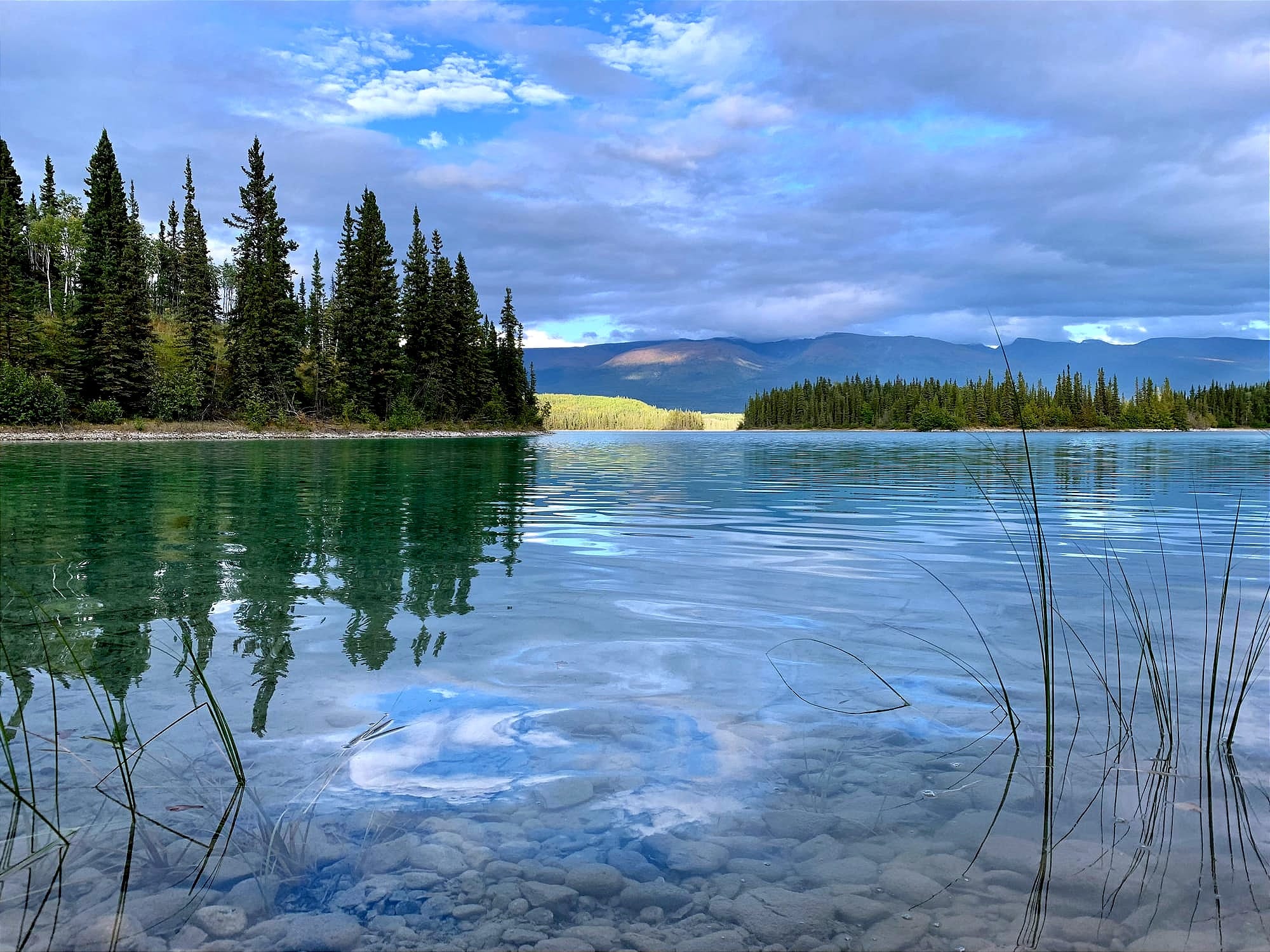
At last, as night falls, we return to the quiet witness holding all these voices. The land itself lies underfoot, steady and patient. It doesn't ask for credentials or excuse itself for existing. It watches us wordlessly, as ancient soil, rolling hills, a tapestry of living connections. Nothing is being proven here. In this stillness, orientation settles in like the first light of dawn. The land is alive, and that is value enough. There is no performance here, only presence. As we pause in this listening field, we can almost hear the answer in the hush: life is not an argument to be won, but a reality to honor. In the quiet, clarity returns. The question has been heard. The responsibility of hearing it remains.
The question doesn't ask for answers yet.
It asks for orientation.
Listening alongside
At the intersection of biology, conservation, governance, and education, I’ve been listening alongside:
- climate science and IPCC assessment work, especially where evidence meets political hesitation
- planetary boundaries research on non-negotiable ecological limits
- lived experience with large carnivore governance and conflict
- ecological understanding of migration, corridors, and interdependence
- Indigenous land-based knowledge systems and Land Back movements
- ongoing questions around why science so often remains advisory rather than binding
The questions in this piece come from living inside these tensions, not from trying to resolve them.